
International Consumer Electronics Show 2001
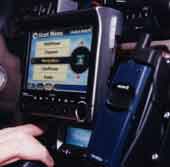 Mobility
was the new mantra at the 2001 International Consumer Electronics Show
(CES), held during 8-11 January 2001 in Las Vegas. So if a product doesn't
move, it doesn't matter! The mobile wares on display ranged from home
networking solutions that allow consumers to take laptops and portable
browsers just about anywhere. To devices that turn a standard automobile
into a fully functional entertainment system.
Mobility
was the new mantra at the 2001 International Consumer Electronics Show
(CES), held during 8-11 January 2001 in Las Vegas. So if a product doesn't
move, it doesn't matter! The mobile wares on display ranged from home
networking solutions that allow consumers to take laptops and portable
browsers just about anywhere. To devices that turn a standard automobile
into a fully functional entertainment system.
In the consumer electronics world, computers are clearly integrating. This year's CES emphasised gadgetry, portability and home networking solutions much more than PC-related technologies.
COMDEX is usually dominated by Microsoft, whose presence seems to be increasingly overwhelming each new year. And even at CES, Microsoft had an impressive display. Their booth had a number of display "rooms" such as a Kitchen, Children's Bedroom and a Living Room. Each showed ways in which Microsoft's software could integrate digital devices into daily life.
And finally the moment Nintendo, Sega and Sony had been fearing, finally arrived. Bill Gates gave the first public demo of x-Box, Microsoft's state-of-the-art game console. Sporting superior graphics with texturing and shadowing, this also features an Ethernet port for broadband gaming capability and four game ports for multi player action.
The Whistler team released its first post-Beta 1 Build to testers just before the show. Also on display was WindowsME, the Connected Home and a DirectTV add-on called UltimateTV. The company also displayed its WindowsCE for Automotive products inside a BMW sports utility vehicle.
Sony is getting into the Internet appliance game with eVilla, a BeOS-based Web browsing device that features a 15-inch, portrait-oriented display and a great-looking interface. It can play streaming audio and has a Memory Stick-based mouse. The device also a dial-up modem with an Ethernet port for future broadband access and two USB ports to connect to printers and external storage devices. The eVilla's debut is scheduled early in 2001.
Sony also displayed its wide range of consumer electronics devices, including a portable MP3 CD player, cable TV set-top box, UltimateTV, digital video cameras and multimedia-integrated PCs, XM-based radios (for receiving radio broadcasts via satellite) and its X-PLODE car audio products.
Toshiba was showing a number of exciting models, such as its NUON DVD players, which can connect with hand controllers and play video games and a range of Secure Digital(SD) format devices.
SD, which is the secure version of a multimedia card, is one of two data storage formats vying to dominate the portable data storage market. They are competing with the likes of Compact Flash, SmartMedia and Sony's Memory Stick. Smaller than any of them, SD has revolutionised the storage capacity for small devices. Both Toshiba and Panasonic displayed portable audio players that were about as big as three AAA batteries.
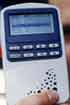 Panasonic,
like many companies, also showed off a cool SD-compatible Internet terminal-like
PC for home, useful even in the kitchen or garage. Panasonic's latest
camcorder includes a DVD-RAM drive that allows video hobbyists to save
their home movies directly onto a small DVD disc. The 2.8GB disc can hold
up to two hours of video saved on Standard mode.
Panasonic,
like many companies, also showed off a cool SD-compatible Internet terminal-like
PC for home, useful even in the kitchen or garage. Panasonic's latest
camcorder includes a DVD-RAM drive that allows video hobbyists to save
their home movies directly onto a small DVD disc. The 2.8GB disc can hold
up to two hours of video saved on Standard mode.
Palm announced that its expansion strategy is going to revolve around SD. In keeping with this, the company displayed a variety of devices; memory, digital cameras, GPS, MP3 players and so forth. SD will probably be Palm's answer to the Handspring SpringBoard.
SD's main competitor is a neat little optical storage device called DataPlay. DataPlay looks like a little CD disk encased in colour plastic, and is said to hold 500 MB of storage, which is one-write only. The real advantage lies in the cost factor. These little disks are priced at $5-10 each.
Also introduced at CES were an amazing number of new-look PCs, most of which featured retro-chrome accented flat panels and small form-factors.
Qubit, Microsoft and several other vendors unveiled home gateway systems designed to provide security, control essential components such as lighting and temperature and keep the family in touch with one another when away from home.
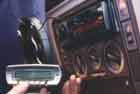 Sirius
and XM introduced a subscription-based satellite system for delivering
radio programs. Built-in receivers in upcoming car models, or systems
similar to in-trunk CD players will let drivers tune in to a variety of
music and news channels from almost any location in the United States.
Sirius
and XM introduced a subscription-based satellite system for delivering
radio programs. Built-in receivers in upcoming car models, or systems
similar to in-trunk CD players will let drivers tune in to a variety of
music and news channels from almost any location in the United States.
The Technology Spotlight for the show were in-car electronics. New innovations for the car continue to attract consumers. Digital audio, video and communications products allow consumers to travel with all of the lifestyle and work style conveniences they have at home. DVD mobile theatre systems for rear seat passengers, MP3 players and satellite radio systems provide quality entertainment options for the mobile consumer.
Hands-free phones, PDA docking stations and wireless networks of your personal devices keep you productive while you commute while voice recognition products that obey spoken commands, telematics systems that automatically summon help in an emergency. Navigation systems provide directions while you drive and protect your safety on the road.
Yagna Balaji
[email protected]
Other Articles
ChiefChat
| Mailbox
| NerdWord
| ProductPreview
| SiteScan
| Techtalk
| GameGuide
VirusWatch
| Webware